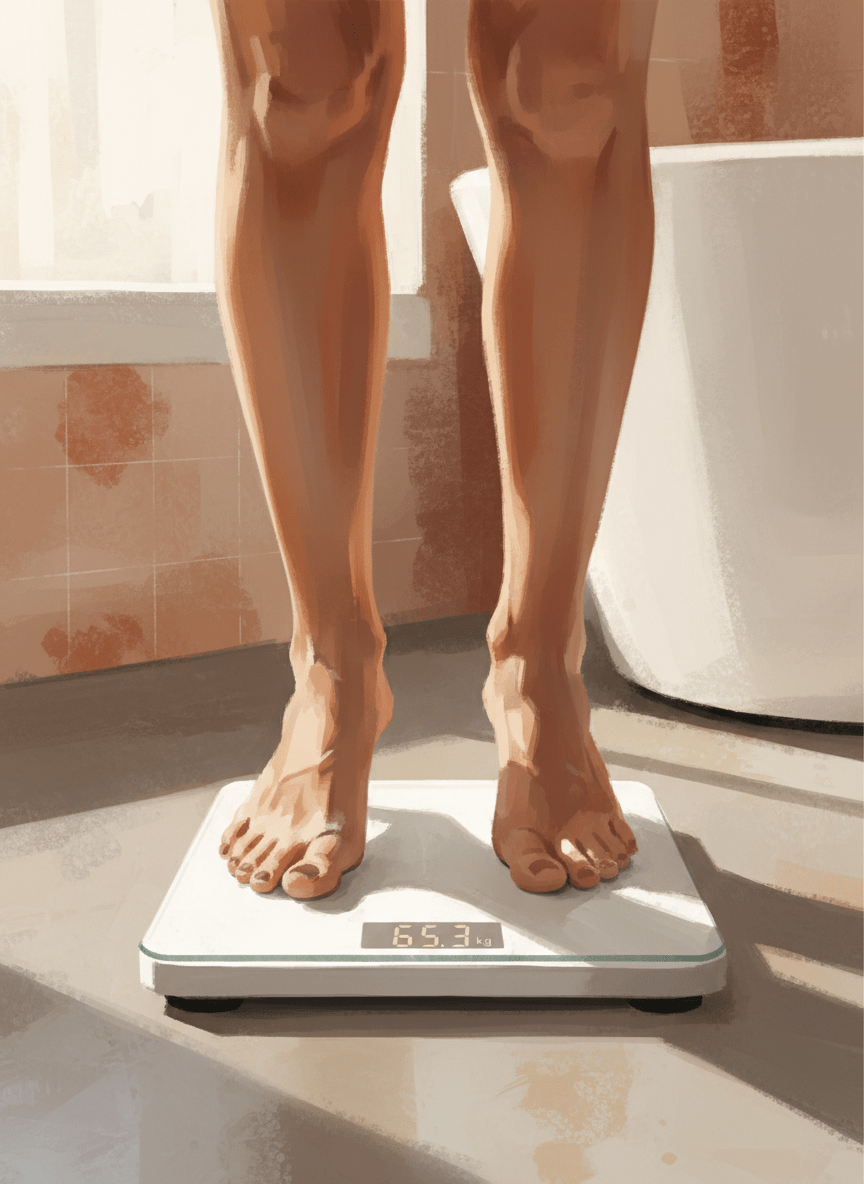
Nothing about your eating or exercise has changed, but the scale keeps creeping up anyway — and it seems to land specifically around your middle, in a way it never used to. Clothes that fit fine last year suddenly feel snug. It’s frustrating, and it’s easy to blame yourself. But this isn’t a discipline issue, and understanding why can take a lot of the self-blame out of it.
What it is
Gradual weight gain, particularly around the abdomen, that happens even when your habits haven’t meaningfully changed. It’s one of the most commonly experienced — and most frustrating — symptoms of perimenopause, precisely because it feels so at odds with the effort you might already be putting in.
Why it happens
As estrogen declines, your body tends to redistribute fat storage from your hips and thighs toward your abdomen — a shift that happens somewhat independently of diet. On top of that, muscle mass naturally declines with age, which slows metabolism, and disrupted sleep or higher stress (common companions during this transition) can drive up cortisol, which also favors fat storage around the middle.
Here’s something worth knowing, not to alarm you, but to inform you: this new middle-weight isn’t quite the same as fat carried elsewhere on your body. The kind that gathers around your abdomen — called visceral fat — sits deeper, around your organs, and is more metabolically active, meaning it releases inflammatory substances into your body. Over time, that low-grade inflammation is linked to things like heart disease and insulin resistance. This is part of why this particular kind of weight gain is worth paying attention to — not just for how it looks, but for what it’s doing underneath. The reassuring part: there’s a lot you and your doctor can do together once you understand what’s actually happening.
When it’s worth a closer look
Gradual weight gain over months, especially around the abdomen, is common during this transition. But it’s worth checking with your doctor if the weight gain is rapid or unexplained over just a few weeks, or if it’s paired with unusual fatigue, hair thinning, or feeling cold all the time — that combination is worth checking your thyroid, since thyroid issues become more common in this age range too and can look very similar.
This is one of 20 symptoms covered in Not Going Crazy: A Perimenopause Symptom Guide — a bite-sized guide covering exactly what’s normal, when it’s worth flagging, and exactly what to say to your doctor for each one. Get the full guide →


Leave a Reply