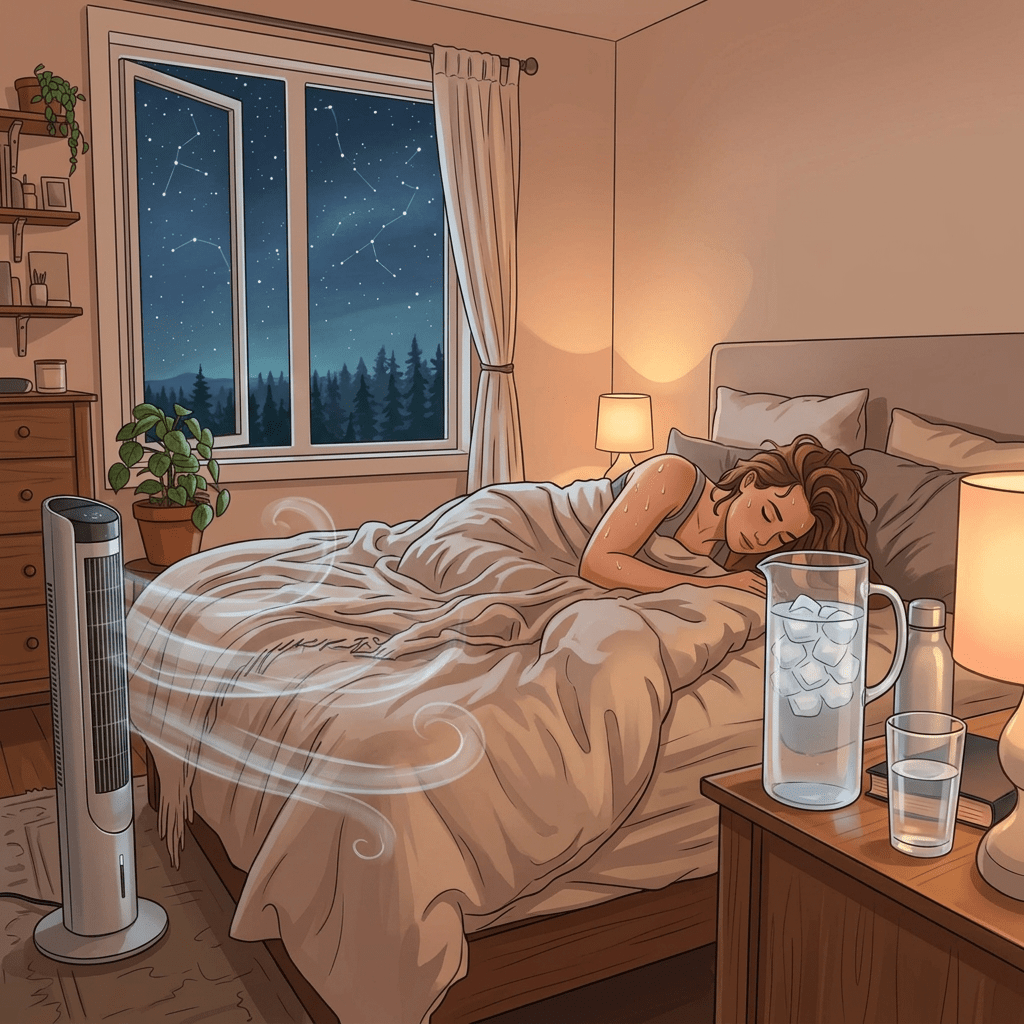
If you’ve woken up with your sheets damp and your pajamas stuck to your skin — sometimes more than once a night — you already know how disruptive this is. It’s not just uncomfortable. It wrecks your sleep, and it can leave you wondering what’s actually going on with your body.
Here’s what’s behind it.
What it is
Night sweats are exactly what they sound like: episodes of heavy sweating during sleep, often intense enough to soak through your pajamas or sheets. Some women get them occasionally; others deal with them most nights. Either way, waking up repeatedly to change clothes or bedding takes a real toll on how rested you feel the next day.
Why it happens
Night sweats are essentially hot flashes that happen while you’re asleep. Your brain has an internal thermostat, located in the hypothalamus, and estrogen normally helps keep it calibrated. As estrogen drops during perimenopause, that thermostat becomes more sensitive — misreading small shifts in body temperature as “too hot” and triggering a sudden cool-down response: flushing, sweating, the works. Because body temperature naturally shifts overnight anyway, sleep seems to make this system even more reactive, which is part of why night sweats can feel worse or more frequent than daytime hot flashes for some women.
When it’s worth a closer look
Occasional night sweats that disrupt sleep but don’t happen every night are common and usually just part of the hormonal shift. But it’s worth mentioning to your doctor if they’re happening most nights and significantly affecting your sleep long-term, or if they show up alongside unexplained weight loss, fever, or swollen glands — that combination is worth ruling out other causes. It’s also worth flagging if you’re waking up gasping or choking, since that pattern can point toward sleep apnea rather than a hormonal cause alone.
This is one of 20 symptoms covered in Not Going Crazy: A Perimenopause Symptom Guide — a bite-sized guide covering exactly what’s normal, when it’s worth flagging, and exactly what to say to your doctor for each one. Get the full guide →


Leave a Reply